Pets rely on clean, fresh water every day, yet many owners are unsure when their fountain filter should be replaced. If you’ve ever searched for pet fountain filter replacement, you’re not alone. One of the most common questions pet owners ask is whether changing the filter really matters and how often it should be done.
The short answer is yes. A filter plays an important role in maintaining water quality, but it doesn’t last forever. Over time, debris, hair, food particles, and other contaminants build up inside the filter, reducing its effectiveness.
In this guide, we’ll explain how often to replace a pet fountain filter, the signs that indicate a replacement is needed, and simple maintenance habits that can help your pet enjoy cleaner drinking water.
What Does a Pet Fountain Filter Actually Do?
Many pet owners assume that the filter is responsible for keeping the entire fountain clean. While it certainly helps, its role is more specific.
A quality pet fountain filter can:
- Capture pet hair and floating debris
- Reduce dirt and dust particles
- Improve water taste
- Minimize unpleasant odors
- Help keep circulating water fresher
However, even the best filter cannot:
- Completely sterilize water
- Clean the fountain basin
- Remove all bacteria without cleaning
- Fix a malfunctioning water pump
Understanding what a filter can and cannot do helps set realistic expectations and ensures proper fountain maintenance.
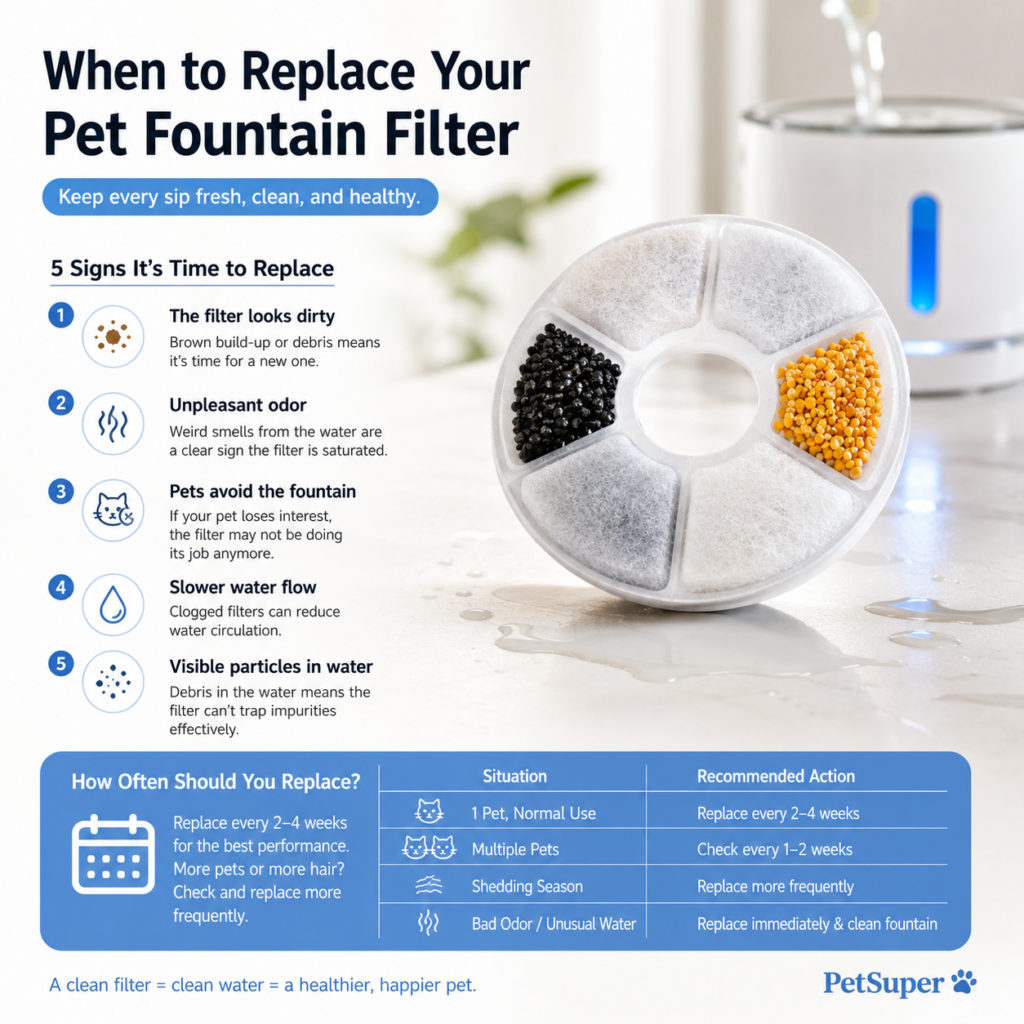
5 Signs You Need a Pet Fountain Filter Replacement
Rather than relying solely on a calendar, it’s important to watch for signs that your filter may no longer be working effectively.
1. The Filter Looks Dirty or Discolored
After weeks of use, filters naturally collect debris and contaminants.
If the filter appears dark, clogged, or covered with visible buildup, it may be time for a replacement.
2. The Water Has an Unpleasant Smell
Fresh drinking water should not have a noticeable odor.
If the fountain begins to smell stale or unpleasant, replacing the filter and cleaning the fountain are recommended.
3. Your Pet Drinks Less Water
Cats and dogs can be surprisingly sensitive to water quality.
If your pet suddenly seems less interested in the fountain, the water may not taste or smell as fresh as before.
4. Water Flow Becomes Weaker
A clogged filter can restrict circulation.
When water flow decreases noticeably, check both the filter and the pump for blockages.
5. It’s Been Several Weeks Since the Last Replacement
Even if everything appears normal, filtration performance gradually declines over time.
Regular replacement helps maintain consistent water quality.
How Often Should You Replace a Pet Fountain Filter?
The answer depends on factors such as the number of pets, their shedding habits, and overall fountain usage.
| Situation |
Recommended Replacement Interval |
| One cat or small dog |
Every 2–4 weeks |
| Two or more pets |
Every 2–3 weeks |
| Long-haired pets |
Every 2 weeks |
| High-traffic households |
Inspect weekly |
| Noticeable odor or buildup |
Replace immediately |
These guidelines can help you establish a maintenance routine, but visual inspection remains the best indicator.
Why Filter Replacement Matters More Than You Think
Some pet owners postpone replacing filters because the fountain appears to be functioning normally.
However, a saturated filter may continue allowing water to circulate while providing little actual filtration.
Regular cat water fountain filter replacement and maintenance can help:
- Improve water freshness
- Encourage healthy hydration
- Reduce unpleasant odors
- Minimize debris entering the pump
- Support longer fountain lifespan
For pets that primarily drink from fountains, these benefits can make a meaningful difference.
Pet Fountain Filter Maintenance Tips
Replacing the filter is only part of keeping a fountain in good condition.
Clean the Fountain Weekly
At least once a week:
- Empty old water
- Wash the water tray
- Remove visible debris
- Clean accessible pump parts
Deep Clean Monthly
Once per month:
- Fully disassemble the fountain
- Wash all removable components
- Remove mineral deposits
- Inspect the pump chamber
- Install a fresh filter
This simple routine helps improve overall fountain hygiene and filtration performance.
Always Rinse New Filters Before Use
Many filters contain activated carbon.
Before installation:
- Remove the new filter from packaging.
- Rinse under clean running water.
- Gently wash away loose carbon dust.
- Install according to instructions.
This quick step helps ensure clean water from the start.
Choosing the Right Replacement Filter
Not all filters are made with the same materials or filtration capabilities.
When selecting a replacement filter, consider:
- Compatibility with your fountain model
- Filtration effectiveness
- Material quality
- Ease of installation
- Availability of replacement packs
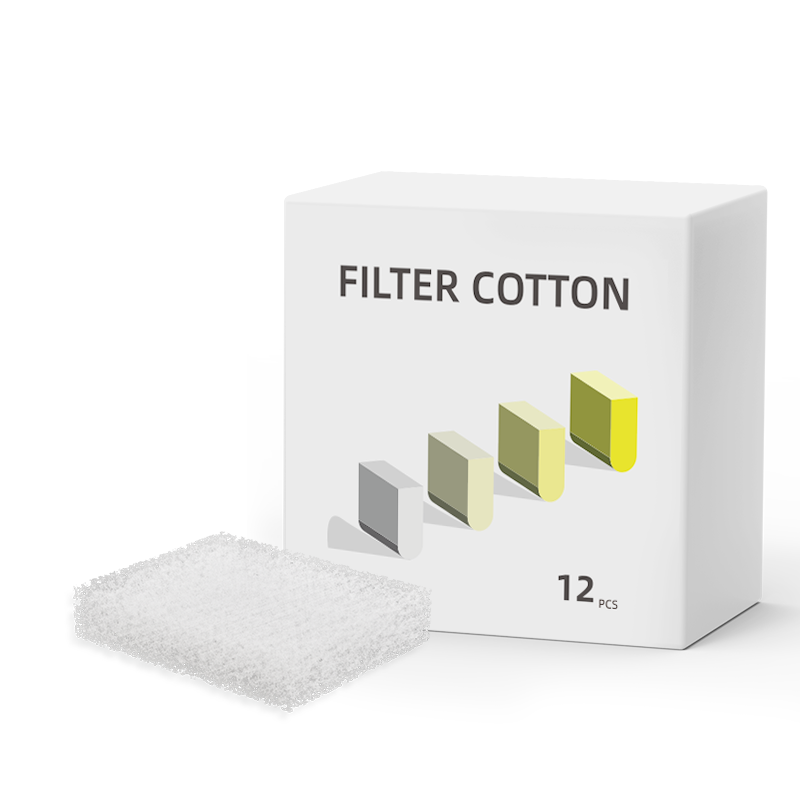
At PetSuper, our replacement filters are designed to fit compatible pet fountains while providing reliable filtration performance and convenient replacement. Using the correct filter helps maintain consistent water quality and supports daily hydration for cats and dogs.
Frequently Asked Questions
Can I wash and reuse a pet fountain filter?
Most pet fountain filters are designed to be replaced rather than reused. While rinsing may remove surface debris, it does not fully restore filtration performance.
How do I know when to change a pet fountain filter?
Common signs include reduced water flow, unpleasant odors, visible dirt buildup, or changes in your pet’s drinking behavior.
Is changing the filter enough to keep the fountain clean?
No. Filters help improve water quality, but the fountain itself should also be cleaned regularly.
What happens if I don’t replace the filter?
Over time, the filter can become saturated and less effective, resulting in poorer water quality and potential buildup inside the fountain.
Conclusion
Knowing when to change a pet fountain filter is one of the simplest ways to maintain a healthier drinking environment for your pet.
While replacement schedules vary depending on usage, paying attention to water quality, odors, flow rate, and filter condition can help you determine the right timing. Combined with proper pet fountain filter maintenance, regular filter replacement ensures your pet always has access to cleaner, fresher water.
If you’re looking for reliable replacement solutions, PetSuper offers compatible pet fountain filters designed for easy installation and dependable performance, helping pet owners keep hydration simple and convenient.


 by Petsuper